
Sanitation · Water supply · Sewer cleaning · Cold-chain transport
Chinese Special Vehicles for Export
Specify the chassis, body and working equipment as one complete vehicle for your operating task.
Our manufacturer relationships support model-specific LHD and RHD new-vehicle enquiries. We coordinate the chassis, body, equipment interfaces and acceptance requirements around your destination and daily workload.
Plan the complete project
Connect chassis, body and working equipment to the duty, service and acceptance scope.
Special vehicle applications
These real vehicle photographs illustrate working applications. They do not establish stock, the proposed model or an export configuration.
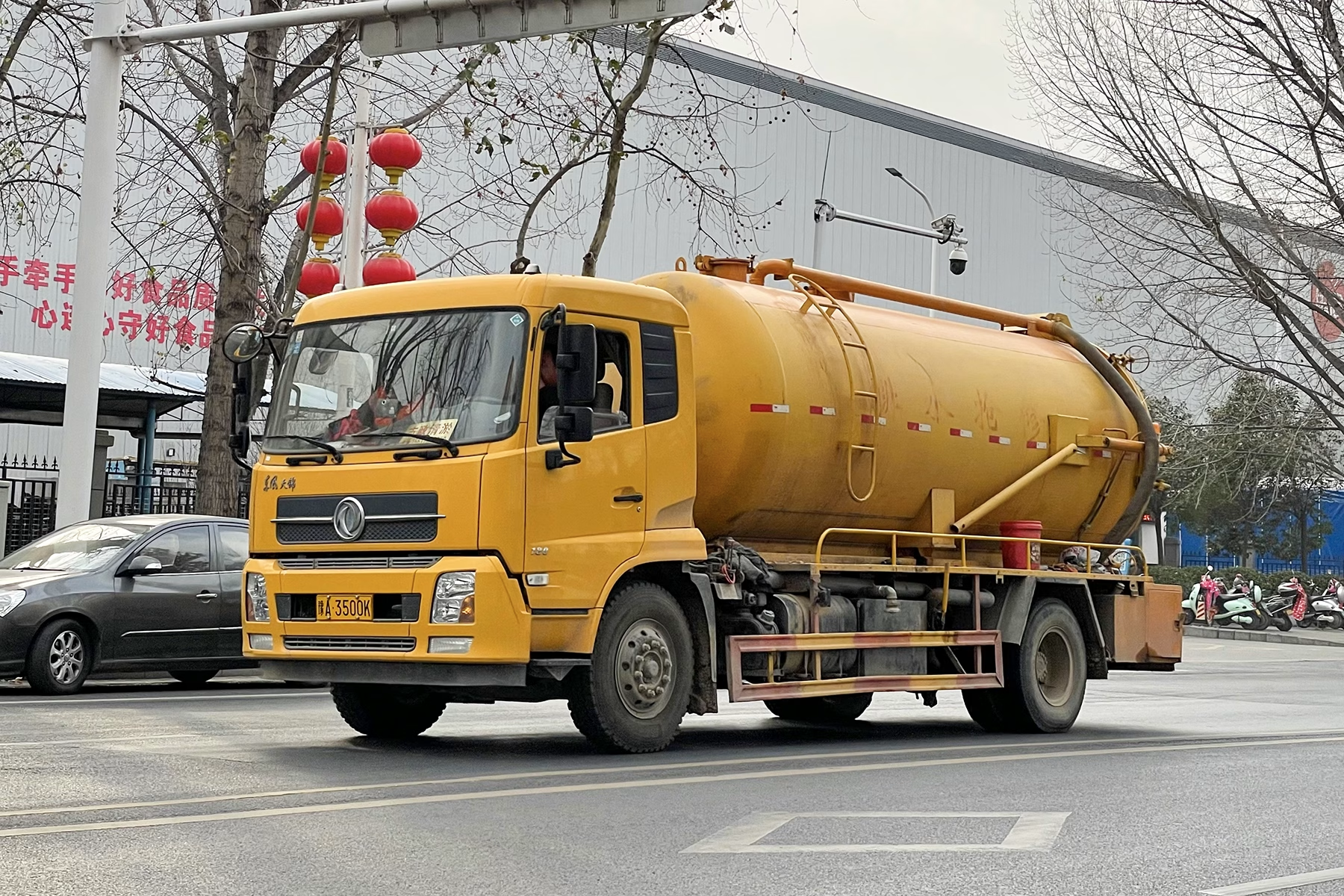
Tank bodies and working systems
Define the liquid, tank materials, cleaning, pumps, hoses and valves. Specify water delivery and vacuum or liquid-collection duties separately.
Dongfeng Tianjin water-supply recovery truck (2022). Photo: Windmemories, CC BY-SA 4.0. Category reference; the offered vehicle and equipment are confirmed separately.
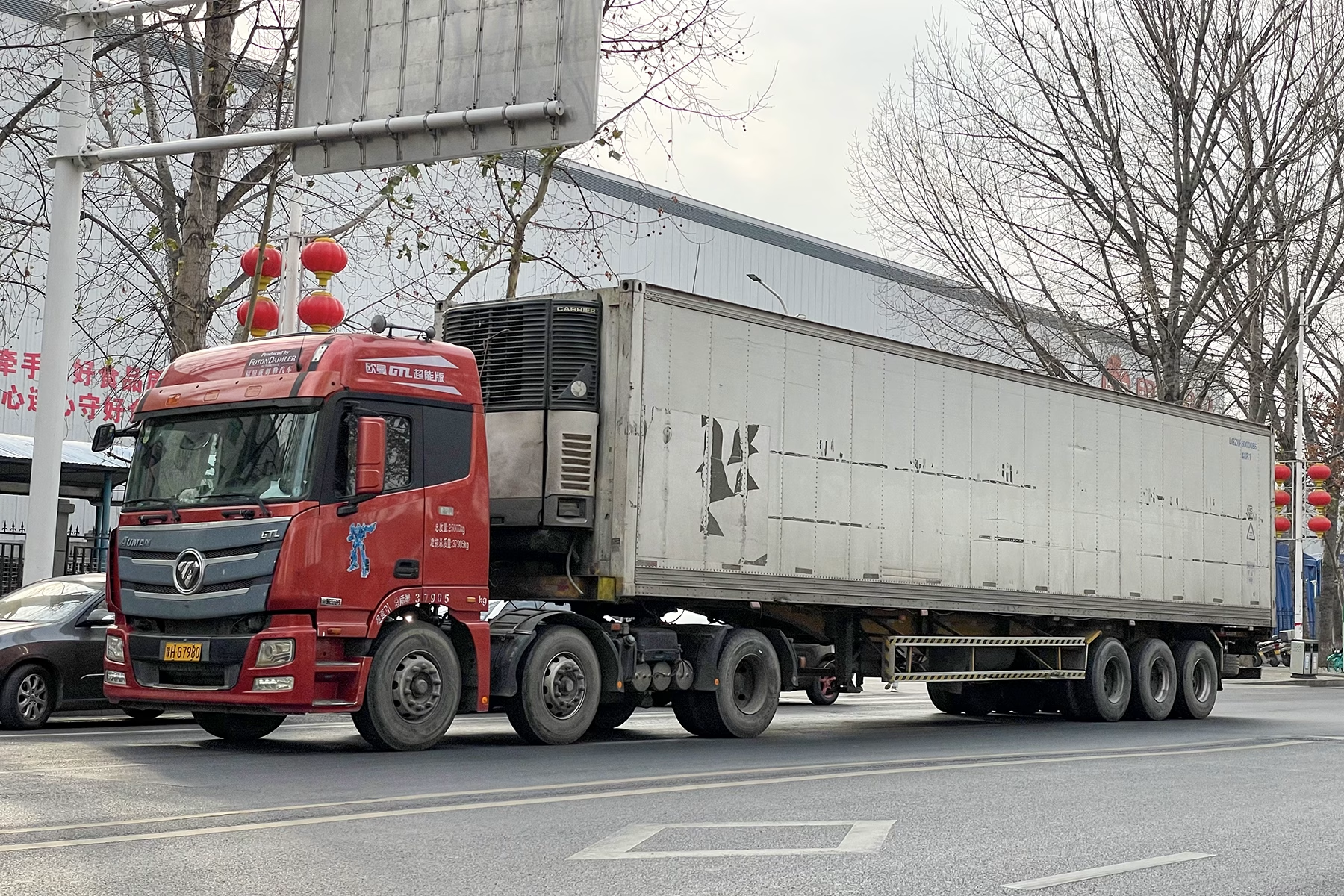
Cold-chain transport
Match the cargo, temperature target, ambient conditions, loading pattern and door-opening cycles to the insulated body and refrigeration system.
Foton Auman GTL refrigerated semi-trailer truck (2022). Photo: Windmemories, CC BY-SA 4.0. Category reference; the offered vehicle and equipment are confirmed separately.
Vehicle range
Choose by the work to be performed. Vehicle size and nominal body volume are only the starting points.
| Application | Operating duty | What to match |
|---|---|---|
| Compactor garbage trucks | Municipal and commercial waste collection | Waste type, daily volume, loading system, collection route and payload |
| Water-supply trucks | Water delivery and site operations | Intended water use, tank materials, cleaning, pump, hoses and valves |
| Vacuum / sewer vehicles | Liquid collection and sewer-maintenance projects | Waste media, tank working volume, vacuum system and any jetting requirements |
| Refrigerated trucks | Temperature-controlled distribution | Cargo, temperature target, ambient conditions, door-opening cycles and insulation |
Availability, supplied configuration and destination documentation are confirmed in the model-specific quotation.
Plan your complete special-vehicle configuration
Compare four procurement briefs for waste collection, water service, drainage maintenance and temperature-controlled delivery. Identify the chassis, body, equipment and acceptance conditions together.
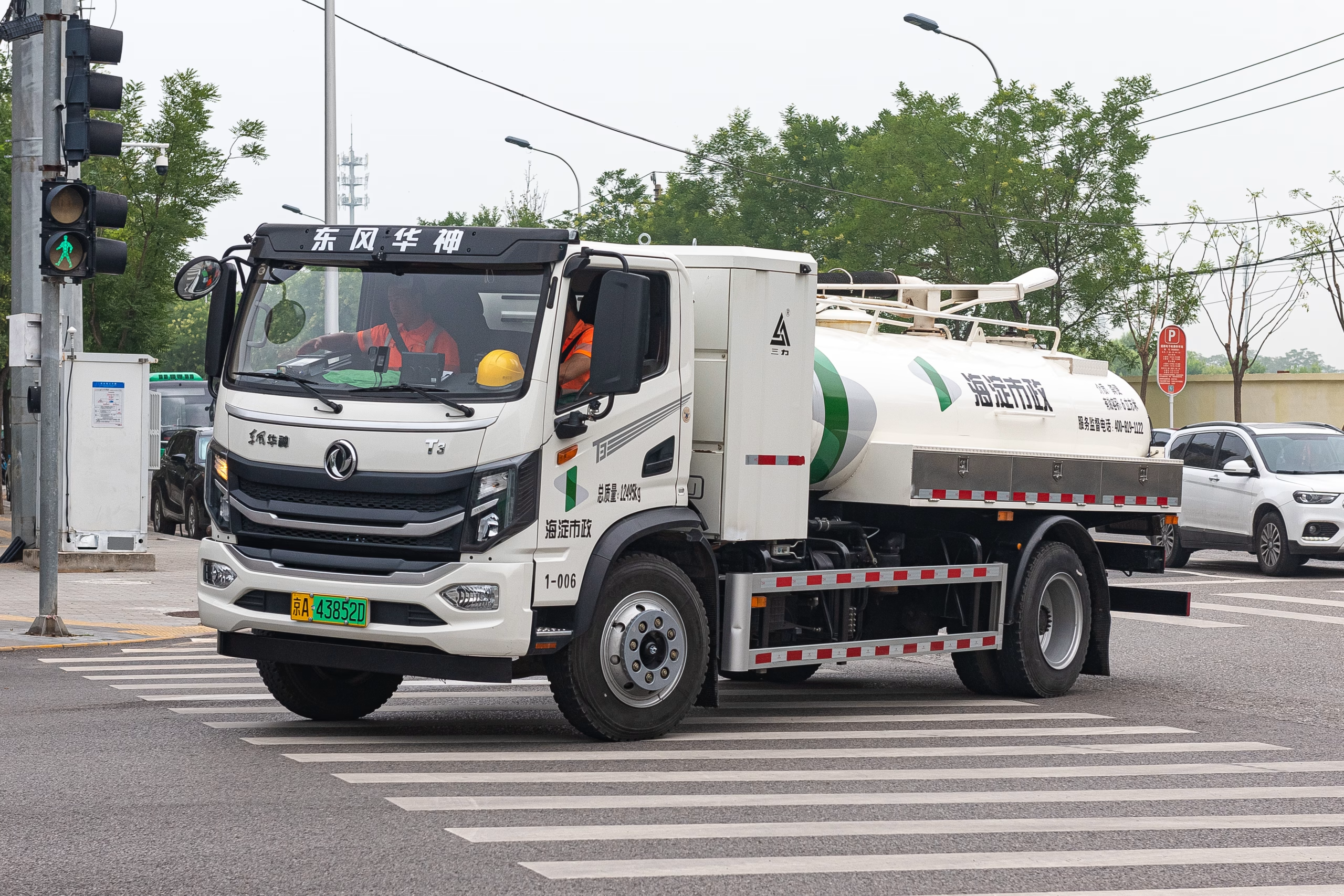
Water Supply Truck – 5–8 m³ Procurement Brief
A 5–8 m³ tank-capacity target. Specify water use, tank materials, pump duty and delivery hoses.
Water-service type reference (2022); capacity not established. Photo: Windmemories, CC BY-SA 4.0.
Vacuum and Sewer Cleaning Truck – Procurement Brief
Choose vacuum collection, jetting or a combined system. Specify each tank, pump and working interface.
Sewage-truck type (2025); jetting not established. Photo: N509FZ, CC BY-SA 4.0.
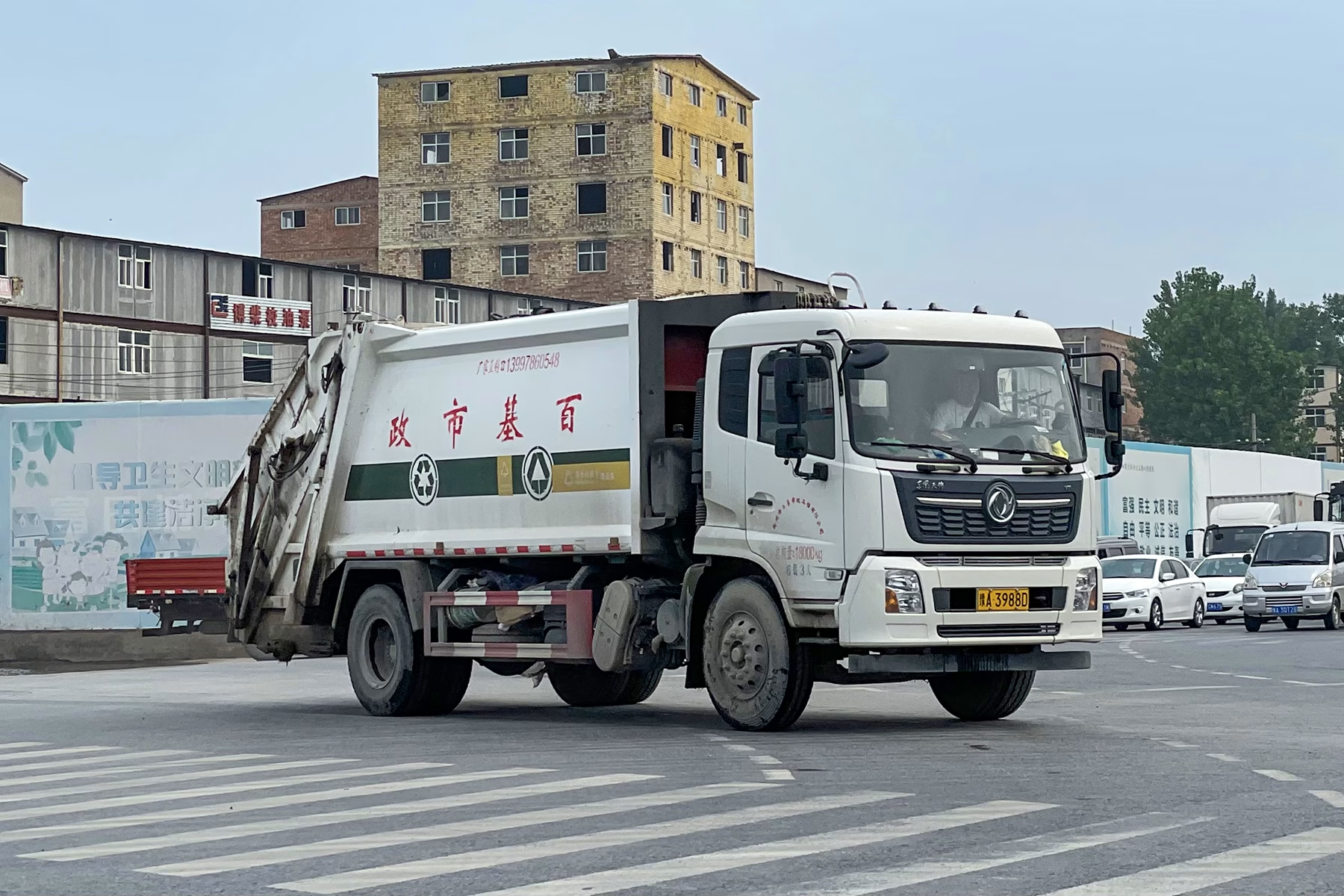
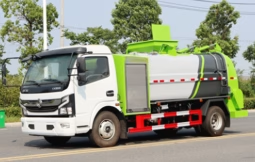
Compactor Garbage Truck – 6–8 m³ Procurement Brief
A 6–8 m³ compactor-body target. Specify bins, collection route, lifter, compaction and finished payload.
Garbage-truck type (2022); capacity not established. Photo: Windmemories, CC BY-SA 4.0.
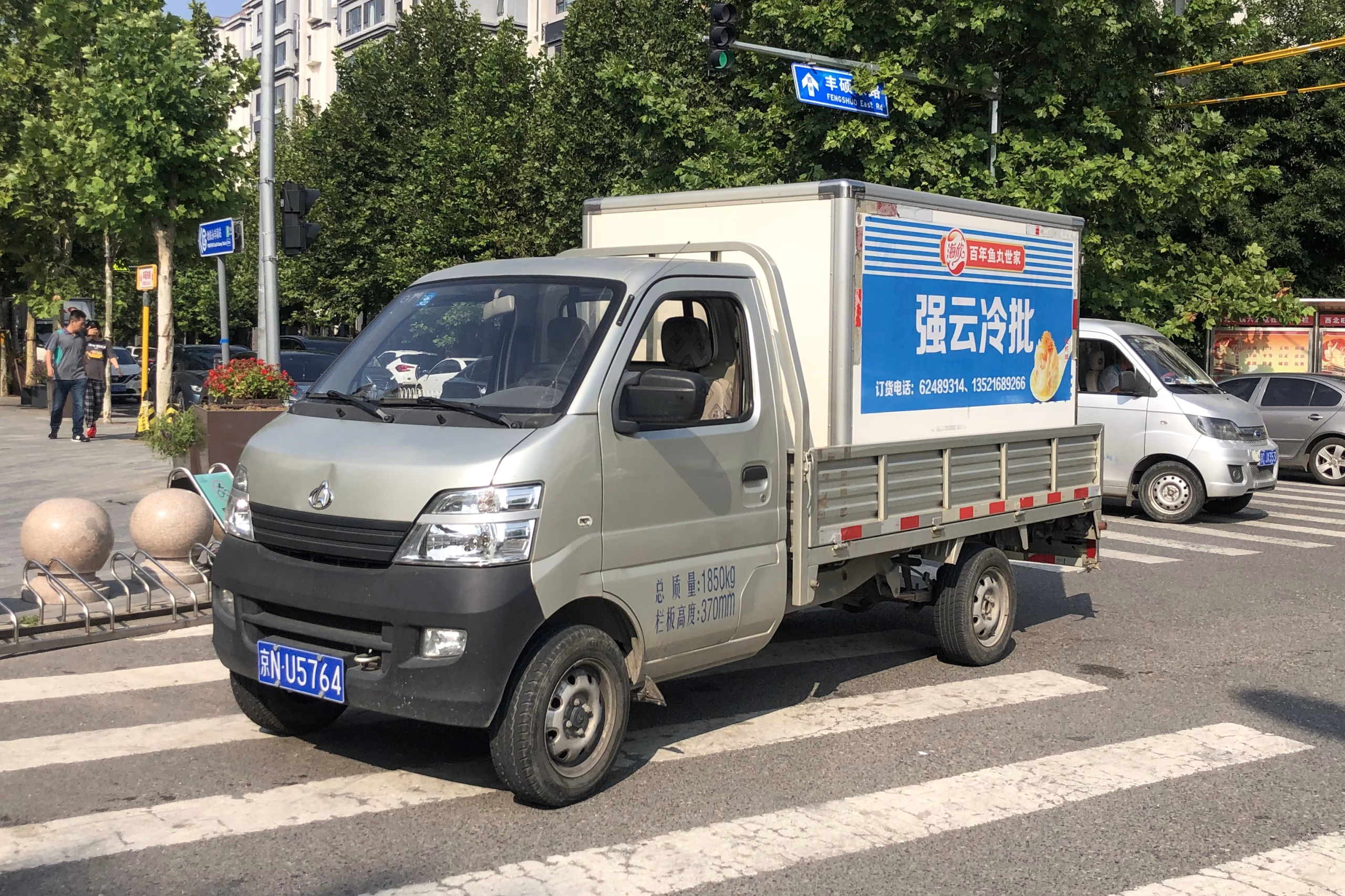
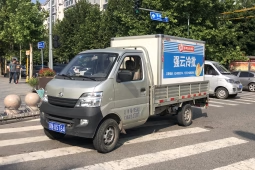
Refrigerated Light Truck – Procurement Brief
Define product temperature and door duty, then match the chassis, insulated body and cooling unit.
Small refrigerated-truck type reference (2021). Photo: N509FZ, CC BY-SA 4.0.
Key checks before you choose
A clear operating brief makes the proposed configuration easier to assess and the quotation easier to compare.
01
Real operating capacity
Define daily workload, material density and usable capacity. Include the body and working equipment when assessing mass and axle loading.
02
Chassis and mounting
Match the wheelbase, chassis limits, subframe and mounting to the body. Identify the chassis model and body builder in the quotation.
03
Working equipment
Specify pumps, vacuum or jetting systems, compaction equipment or refrigeration by the required duty, rather than a product label alone.
04
Control and power interfaces
Confirm auxiliary power, controls, electrical connections, hoses and safety functions between the chassis and working system.
05
Acceptance evidence
Agree the measurements, equipment demonstrations and manufacturer test records for the selected build before placing the order.
06
Support responsibilities
Distinguish chassis, body and equipment warranty support. Request component identification, manuals, consumables and initial service parts.
What belongs in your quotation
Use one written technical schedule for the manufacturer, complete vehicle or machine, equipment and commercial scope.
| Scope | Information to confirm | Why it matters |
|---|---|---|
| Chassis | Exact model, steering side, engine, gearbox, wheelbase and load limits | Provides the base specification for the complete vehicle |
| Body | Builder, materials, dimensions, working volume and tare mass | Shows the actual body scope and its mass implications |
| Equipment | Component models, duty points, controls and interfaces | Makes working performance and included equipment clear |
| Inspection | Identity checks, dimensions, equipment function and agreed records | Defines the acceptance evidence for the supplied build |
| Commercial scope | Options, spares, training, warranty, packing and shipping terms | Identifies who supplies and supports each part of the vehicle |
From enquiry to a defined order
01 · Operating brief
Send destination, quantity, application, operating conditions and the body or implements required.
02 · Configuration review
We coordinate the exact factory model, offered options and equipment interfaces with the manufacturer.
03 · Offer and acceptance
Review the technical schedule, included items, inspection evidence, service scope and shipping terms.
Choose your next procurement decision
Start with the task you need to solve. These guides help you prepare a model-specific brief and compare complete quotation scopes.
Complete project
Chassis, body and equipment
Use a complete technical schedule with working systems, interfaces and acceptance.
Collection
Compactor garbage trucks
Specify the waste stream, real bins, lifting interface, route and finished load.
Water service
Water-tanker systems
Name the water use, tank and wetted parts, pump duty, hoses and cleaning scope.
Cleaning
Vacuum, jetting or combined
Distinguish collection and cleaning duties, tank functions and optional recycling.
Cold chain
Refrigerated transport
Define cargo temperature, body and airflow, door cycles, power and evidence.
Browse existing special vehicle models
Frequently asked questions
Can you source both LHD and RHD special vehicles?
Yes, we review both steering-side enquiries through our manufacturer relationships. The exact chassis export version, body compatibility, quantity and destination requirements are confirmed for the proposed project.
How do I compare compactor truck capacities?
Compare the waste type, usable body volume, finished mass and loading system together. Compaction performance and route conditions affect practical operation; a body-volume figure alone does not establish permitted payload.
Is a water-spraying truck suitable for drinking-water delivery?
Drinking-water delivery and non-potable spraying are different applications. Specify water use, tank and wetted materials, coatings, cleaning arrangements, pumps, hoses and valves for the intended service.
Are vacuum collection and high-pressure jetting the same function?
No. Specify the required collection duty and any separate jetting duty, including media, working volume, flow, pressure and operating duration. The quotation should identify which systems are included.
What information is needed for refrigerated transport?
Describe the cargo, temperature target, ambient conditions, loading temperature, route and door-opening pattern. Match the insulated body and refrigeration system to that duty; do not rely only on the cooling unit’s label.
How are destination and equipment requirements checked?
The importer verifies local import, registration and intended-use requirements for the exact proposed configuration. We confirm which manufacturer and export documents are available for the chassis, body and equipment.
What is included in the quotation?
The offer should identify the manufacturer and exact version, supplied equipment, options, spare parts and trade terms. Packing, inspection, freight and destination charges are listed as included or excluded so that different offers can be compared fairly.
How are shipping and delivery dates confirmed?
We confirm the factory schedule and transport proposal for the selected configuration and quantity. Shipping depends on finished dimensions, mass, packing and the route to your destination port. Production and transport estimates are shown separately.
What support should be agreed before ordering?
Request the operator and service manuals, maintenance schedule, initial consumables, spare-parts identification and warranty responsibilities for the actual components supplied. Discuss commissioning or training if the equipment needs it.
What should I send for a quotation?
Send your destination country and port, quantity, application, operating conditions and required equipment. Include the model or technical schedule if you have one. We use this information to propose an identified configuration and an itemized offer.
Tell us what the vehicle or machine needs to do
Send the destination, quantity and operating brief. We will review an identified configuration and the scope of your quotation.