
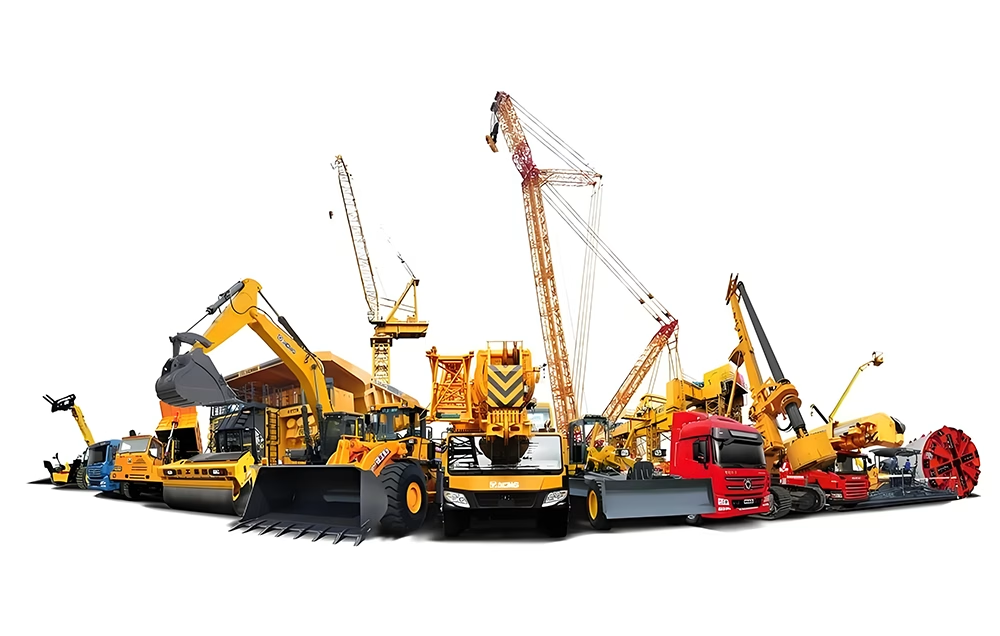
China has become the global production base for a variety of construction machinery products , including excavators, wheel loaders, cranes, bulldozers, and road rollers. For importers in Africa, Southeast Asia, the Middle East, and Eastern Europe, purchasing a machine from China enables higher profits.
However, importing heavy machinery is not a straightforward business. Smaller than consumer goods, the machines are categorized using a complex methodology, face highly regulated safety and emissions guidelines, and require specialized shipping and documentation arrangements. This guide is written to introduce the purchasing process to those new to buying directly from Chinese suppliers, including dealers, contractors, and project managers. It covers the entire process, from selecting products to delivery, and is designed for your complete reading.
Step 1: Product Identification and HS Code Classification
Before initiating an order, it is critical to confirm that the machinery you intend to import complies with your country’s import regulations.
Key Considerations:
Clearly define the product category and intended use (e.g., crawler excavator, mobile crane, motor grader).
Identify the correct Harmonized System (HS) Code. For example:
Crawler excavator: 8429.52.10
Truck-mounted crane: 8705.10.00
Determine if the equipment contains regulated components, such as:
Internal combustion engines (subject to emissions control)
Lithium-ion batteries (classified as dangerous goods)
Check if special certifications are needed (e.g., CE for Europe, EPA for the U.S., SASO for Saudi Arabia).
Summary:
Correct product classification also prevents the risk of customs misdeclaration and penalty. It also guarantees that you produce the right technical papers and understand your import duties or apply preferential rates (e.g., under the ASEAN-China FTA).
Step 2: Documentation and Compliance Requirements
Importing construction machinery requires detailed and accurate paperwork, both for Chinese export customs and your own country’s import regulations.
Essential Documents:
Commercial Invoice: Lists product description, brand, model, serial number, and price (FOB/CIF).
Packing List: Includes weight, volume, packaging method (e.g., crate, steel frame), and unit details.
Bill of Lading (B/L): Provided by the shipping company upon vessel departure.
Certificate of Origin (Form E, Form A, or CO): For preferential tariff treatment in eligible countries.
Technical Data Sheet: Specifies engine type, power rating, emissions standard, weight, dimensions, etc.
Export License: Required for controlled items.
Inspection Certificate (e.g., SGS/CCIC): Sometimes required by the importer’s national authority.
Dangerous Goods Declaration: If lithium batteries or pressurized systems are involved.
Summary:
Full documentation ensures a lower chance of customs detention or confiscation. Be sure to check with your customs broker specifically which forms require translations, notarizations, or legalization by the Chinese embassy or chamber of commerce.
Step 3: Booking Transport and Preparing Cargo
Construction machinery typically exceeds standard container sizes or has special handling requirements.
Transport Options:
Containerized Shipping (FCL): For modular or smaller machines.
Flat-Rack/Open-Top Containers: For medium-sized machinery with height/width constraints.
Ro-Ro (Roll-on/Roll-off): Ideal for mobile machinery like rollers or loaders.
Breakbulk Shipping: Used for ultra-heavy or oversized machines such as tower cranes.
Cargo Preparation:
Reinforced packaging (steel frame, wooden crates, or shrink-wrap)
Export markings: lifting points, weight, center of gravity
Fumigation certificate if wooden packaging is used
Summary:
Choosing the appropriate mode of transport is of paramount importance, as it avoids port rejection and reduces the cost of diversion. Employ the services of a professional freight forwarder that specialises in out-of-gauge or project cargo.
Step 4: Export Customs Clearance in China
Before shipping, the goods must be declared to China Customs.
Clearance Process:
Submit the customs declaration electronically (via a certified freight forwarder).
Provide all supporting documents, including the invoice, packing list, CO, and technical specs.
Some cargo may be selected for physical inspection.
Pay applicable export duties (if any) or use bonded zones for VAT optimization.
Receive release documents and shipping confirmation.
Summary:
Clearing customs in China is relatively straightforward. Usually, there were delays due to discrepancies in documentation or incorrect product declarations. You can find a professional export agent to solve the problem.
Step 5: Import Clearance at Destination Country
Once the cargo reaches your port, the import clearance process begins.
Importer Actions:
Submit customs declaration using local licensed brokers.
Provide original shipping documents: B/L, CO, invoice, packing list, technical sheet.
Obtain any required import licenses, emissions certificates, or local standards approvals.
Pay applicable import duties, VAT/GST, and other levies.
Arrange for port inspection or post-clearance verification if mandated.
Collect the equipment and arrange inland delivery.
Summary:
Import regulations vary by country – some countries have more relaxed used equipment import restrictions, and others (EU, North America) have strict emission and safety regulations. Regulations should be verified before shipment, as customs authorities at the local level are often critical factors.
Step 6: Risk Control and Cost Optimization
Due to the high value and complex nature of construction machinery, importers must take proactive steps to manage financial and operational risks.
Best Practices:
Insurance: Secure all-risk marine insurance covering at least 110% of invoice value.
Trade Terms: Use CIF or FOB with clear cost-sharing agreements. Avoid vague terms that can lead to disputes.
Payment Terms: LC (Letter of Credit) or secured advance payments are recommended.
Bonded Warehousing: Consider importing via bonded zones for tax benefits or phased clearance.
After-Sales Support: Ask the supplier for spare parts options and maintenance documentation.
Summary:
Risk control ensures that purchasing goods are kept on schedule, maintain capital safety, and achieve a sustainable and win-win cooperation relationship, thereby avoiding risks for both parties, with a reputable and stable China Manufacturer. Knowing Incoterms, local taxes, and warranty terms can significantly impact your bottom line.
Conclusion
Construction Machinery Import from China: A Good Choice for Construction Equipment Distributors from All Over the World. However, success is contingent upon a strong understanding of certification codes, documentation rules, transportation logistics, and customs processes, both in China and for your target market.
By reading this guide and collaborating with skilled trade professionals, you will reduce risks and achieve the most profitable outcomes. Auto From China is your partner for comprehensive sourcing, documentation, and delivery of your machinery imports.
Plan the next buying step
Related buying check: customs clearance and vehicle approval checklist. Have the destination assess the actual vehicle specification and approval route separately from customs release before scheduling road use.
Send the vehicle or parts requirement for an itemized sourcing quotation with the destination, quantity and requested support.