
Choose around the goods and the delivery operation. A van offers an integrated enclosed load space; a light-truck chassis offers different body possibilities. Compare the finished vehicles on the same load, access and route brief.
Measure goods, pallets and the largest item.
Describe doors, handling equipment and stops.
Confirm body, mass limits and service scope.
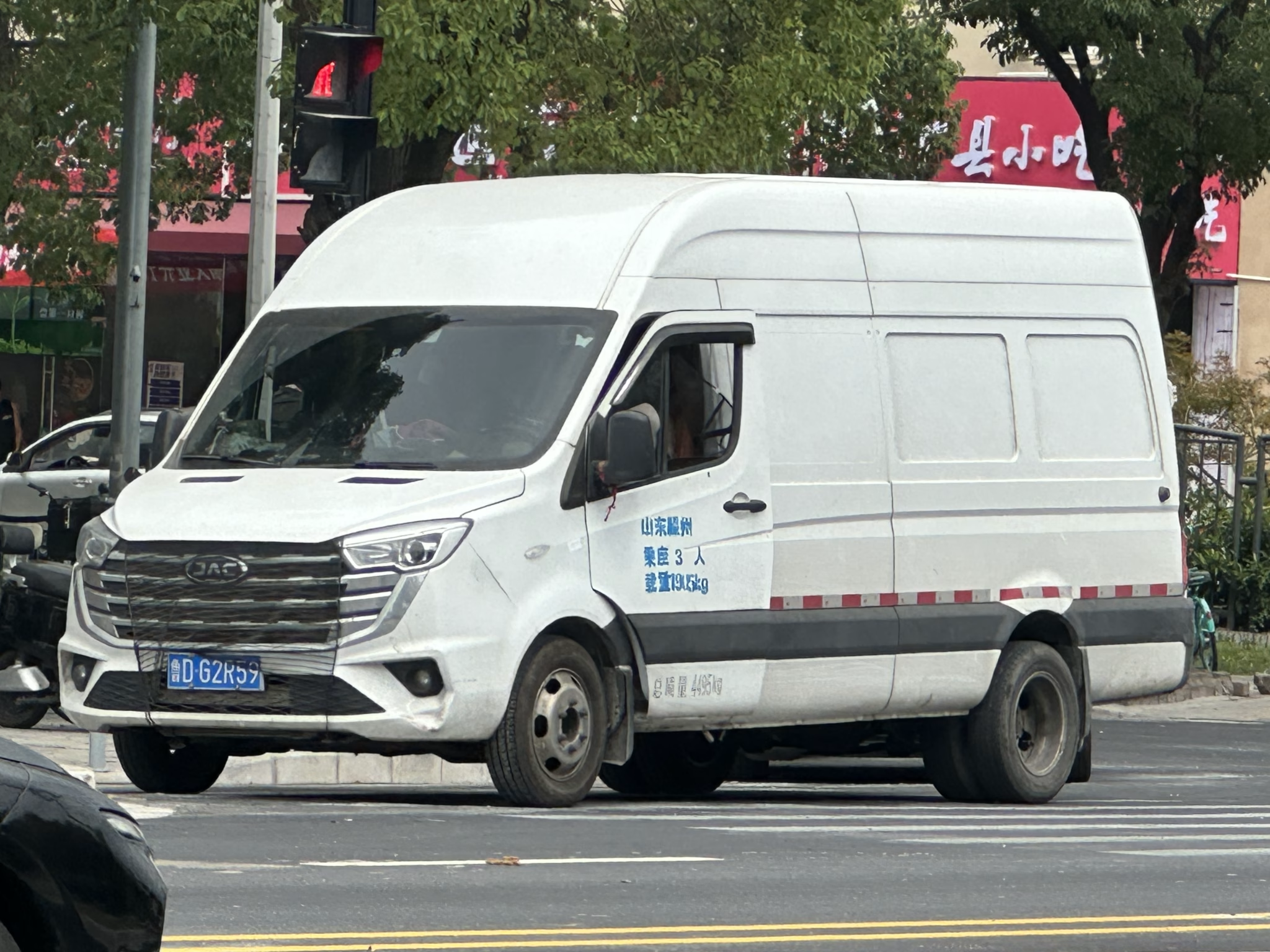
Start with the largest item and a normal delivery day
Record the normal and maximum cargo mass, item dimensions and loading pattern. Include the largest individual item, not only the total cubic volume. For pallet deliveries, give pallet dimensions, the number carried and whether the load must be reached from the side or rear. For a service van, include shelves, tools, a partition and the mass of the permanent fit-out.
Describe a representative working day: distance, stops, time at each stop, parking access and where loading equipment is available. A route with hand unloading and frequent curbside stops can produce a different vehicle brief from a warehouse-to-warehouse pallet route. Photograph or sketch any narrow entrances and height restrictions.
Compare usable space and loading access
A cargo van needs clear floor length, width between wheel arches, internal height and door-opening dimensions. Exterior length and advertised volume do not establish that a particular item will fit. Door aperture, the turning space needed to move an item inside and the usable area after shelving all matter.
A light truck needs the finished body drawing. Specify internal box dimensions or the actual dropside platform, loading height, door arrangement and securing points. If a tail lift is requested, include its rating, platform dimensions, installation mass and power requirements in the comparison. The body should be included in the quoted vehicle scope.
Separate body flexibility from payload
Enclosure, weather protection and handling access are separate decisions. A van can suit tools and packaged goods; a box body can provide a different cargo envelope; a dropside body can offer different loading access. These are options to compare against the task rather than a universal ranking of vehicle types.
Use the complete ready-to-operate mass and the applicable gross, axle and tyre limits. Confirm how fuel, occupants and accessories are treated in the mass figures. A bare chassis can appear to offer more capacity simply because the body and equipment have not yet been counted. Ask for the finished configuration and loading assumptions.
Check the route, driver workspace and export version
Compare overall dimensions, turning access, cab entry, visibility and the proposed powertrain for the actual route. State gradients, road surface, local fuel and daily operating hours. Request service information for the exact engine and transmission; a model-family name does not identify all versions.
JAC’s Sunray reference includes cargo, passenger and specialist derivatives, different roofs and powertrain alternatives. It illustrates why the cargo model code and body need to be named. Auto From China reviews factory LHD and RHD new-vehicle enquiries through its manufacturer relationships, with the exact export version and quantity confirmed separately.
Compare one complete scope across the offers
Give each supplier the same goods, route and loading brief. Ask each to return a chassis or vehicle code, body specification, usable dimensions, mass basis, options and exclusions. Record which solution meets the largest-item check and which requires a change in the loading routine.
Include manuals, initial spares, inspection, warranty responsibilities and packing or transport in separate lines. A lower vehicle-only price may exclude the equipment that makes the vehicle useful. Use the written configuration schedule to compare the actual alternatives and identify questions still open before ordering.
Put these items in the enquiry
| Decision | Cargo van enquiry | Light truck enquiry |
|---|---|---|
| Cargo fit | Clear floor, wheel-arch width, roof and door openings | Internal box or platform dimensions and body drawing |
| Handling | Side/rear access, partition and shelves | Doors, dropsides, tail lift and loading height |
| Mass basis | Ready-to-operate vehicle including fit-out | Finished chassis plus body and equipment |
| Route | Stops, parking, access and cab requirements | Overall dimensions, access, road conditions and body clearance |
| Export build | Cargo model code, factory steering side and documents | Chassis and body identities, factory steering side and documents |
Four cargo-van programme references on one loading brief
VIEW CS2 Transor, TOANO high-roof, Sunray cargo and Fushun are four starting points for a cargo enquiry. The manufacturer catalogues identify different bodies and derivatives; they do not identify an available export offer. Put one named cargo build per programme against the same load and handling task.
| Programme enquiry | Catalogue question | Physical check before order |
|---|---|---|
| VIEW CS2 cargo | Which Transor/cargo model is offered? | Partition, floor length and clear side/rear apertures |
| TOANO high-roof cargo | Which roof, body length and wheelbase? | Largest package and depot height clearance |
| Sunray cargo | Which cargo variant and engine? | Measured loading access and approved seats |
| Fushun cargo | Which current manufacturer/export code? | Body, operator layout and exact document identity |
Door aperture and completed load are separate checks
Use an actual package drawing and specify whether it may be tilted. An invented item 1,600 mm wide will not pass through a 1,500 mm clear door opening in its required orientation, even if the load space beyond the door is wider. Both values are planning assumptions. Request measured clear openings after seals, handles and any body equipment are installed.
A nominal cargo rating does not answer how much remains after a partition, racks, floor lining and tools are fitted. Agree the manufacturer's completed mass definition, approved gross and axle limits, passengers and equipment. Use the peak route load rather than the average parcel weight.

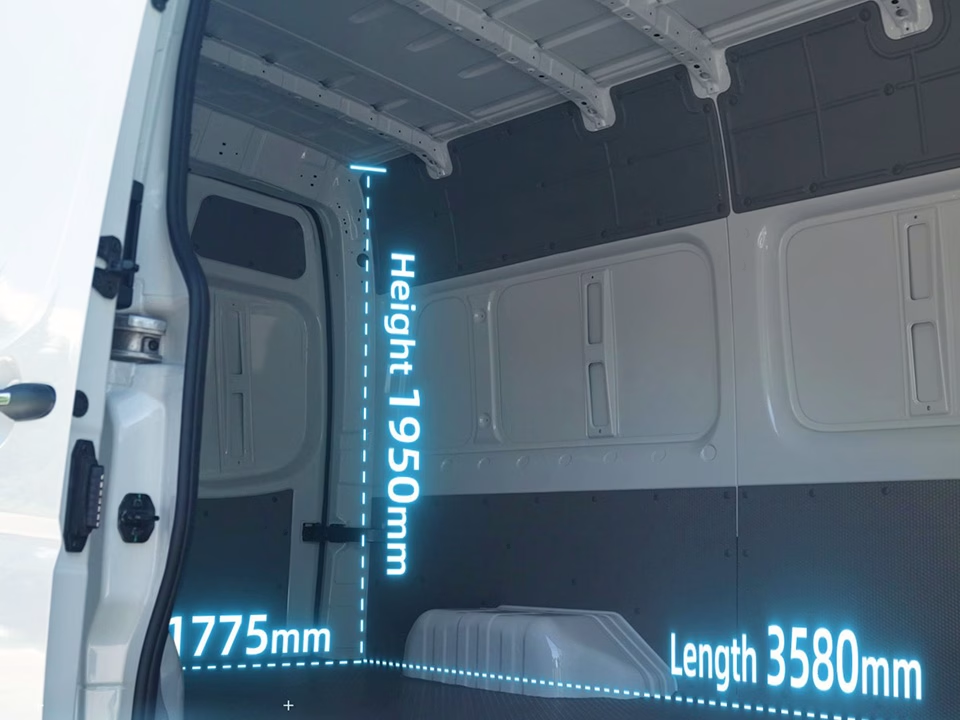
For a Senegal delivery enquiry, confirm the actual import and registration file with the local importer separately; the country name does not establish a tariff or cargo-build approval. Compare the same largest package, peak load, stop pattern and depot clearance before choosing the van family.
Relevant product briefs
Use these live briefs to prepare a configuration enquiry. The photographs and manufacturer references do not establish current stock or a confirmed export offer.
JAC Sunray Cargo Van
Review the model-specific configuration, body, working route and factory export version before comparing an offer.
Foton AUMARK S Light Truck
Review the model-specific configuration, body, working route and factory export version before comparing an offer.
Questions buyers ask
Which measurements decide whether a load fits?
Check clear floor length, wheel-arch width, internal height and every loading aperture against the largest item. Include space for handling, shelves, restraints and any fixed equipment.
When should I compare a light truck with a cargo van?
Compare finished vehicles when the cargo envelope, loading method or body equipment differs. Use the same goods and route brief for both offers, including weather protection, stops and unloading access.
Does advertised cargo volume establish payload?
No. Usable space and permitted mass are separate checks. Ask for the finished vehicle mass and applicable gross, axle and tyre limits, with occupants, fuel and fit-out assumptions identified.
What changes if a tail lift is requested?
Specify platform dimensions, required lifting duty, installation mass, electrical supply and rear clearance. Include the lift in the complete vehicle drawing and mass calculation, rather than comparing a bare chassis.
Can the same van name cover passenger and cargo versions?
Yes, a family name can cover different bodies and equipment. Request the cargo model code, roof, wheelbase, engine and factory steering configuration on the quotation.
What should accompany a first enquiry?
Send cargo dimensions and mass, delivery route, loading method, destination, quantity and factory LHD or RHD requirement. Mark any clearance or handling condition that cannot change.
Send the destination, quantity and the operating details above. We will review the identified manufacturer version and quotation scope.
Continue your selection
Technical references
References reviewed 11 October 2026. This guide provides procurement questions and illustrative analysis. Manufacturer examples describe the linked published versions; they do not confirm our offered build, destination approval or a supply commitment. Use the manuals and written technical schedule for the actual equipment.