
A wholesaler in Ghana or Côte d’Ivoire needs a truck that carries the planned delivery, enters the receiving yards and completes its stops. Foton AUMARK S and JAC N Series are useful family-level enquiries, but neither name describes one universal payload or engine. Compare two specified completed trucks with the same body and delivery duty.
The table compares the current international AUMARK S and JAC New N-Series family catalogues. Their powertrain choices are useful for a shortlist; a purchase decision needs two identified completed trucks in the same gross-mass class and delivery duty. The photographs are family references: the regional N56 image does not show an exact current New N-Series build.
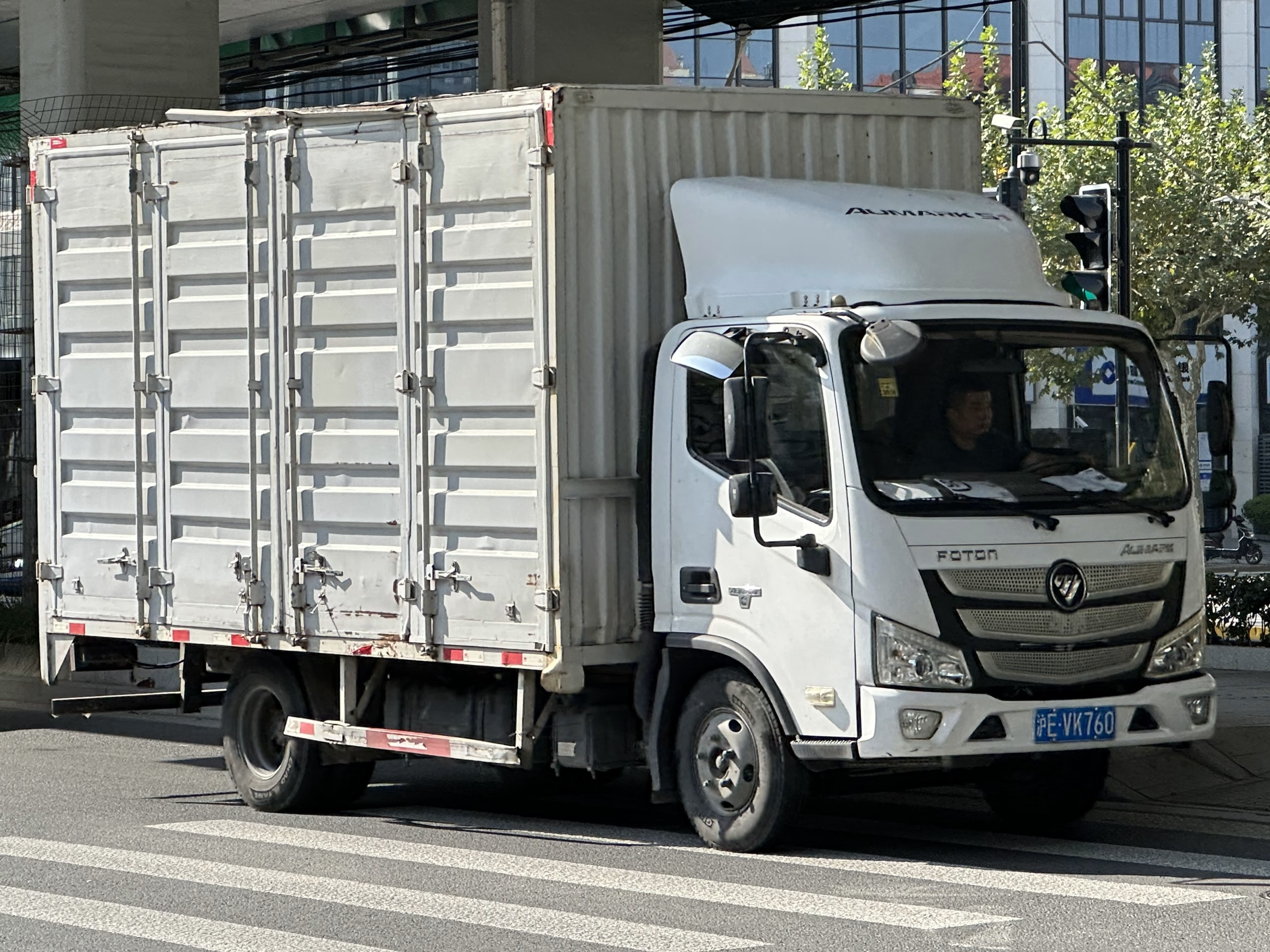
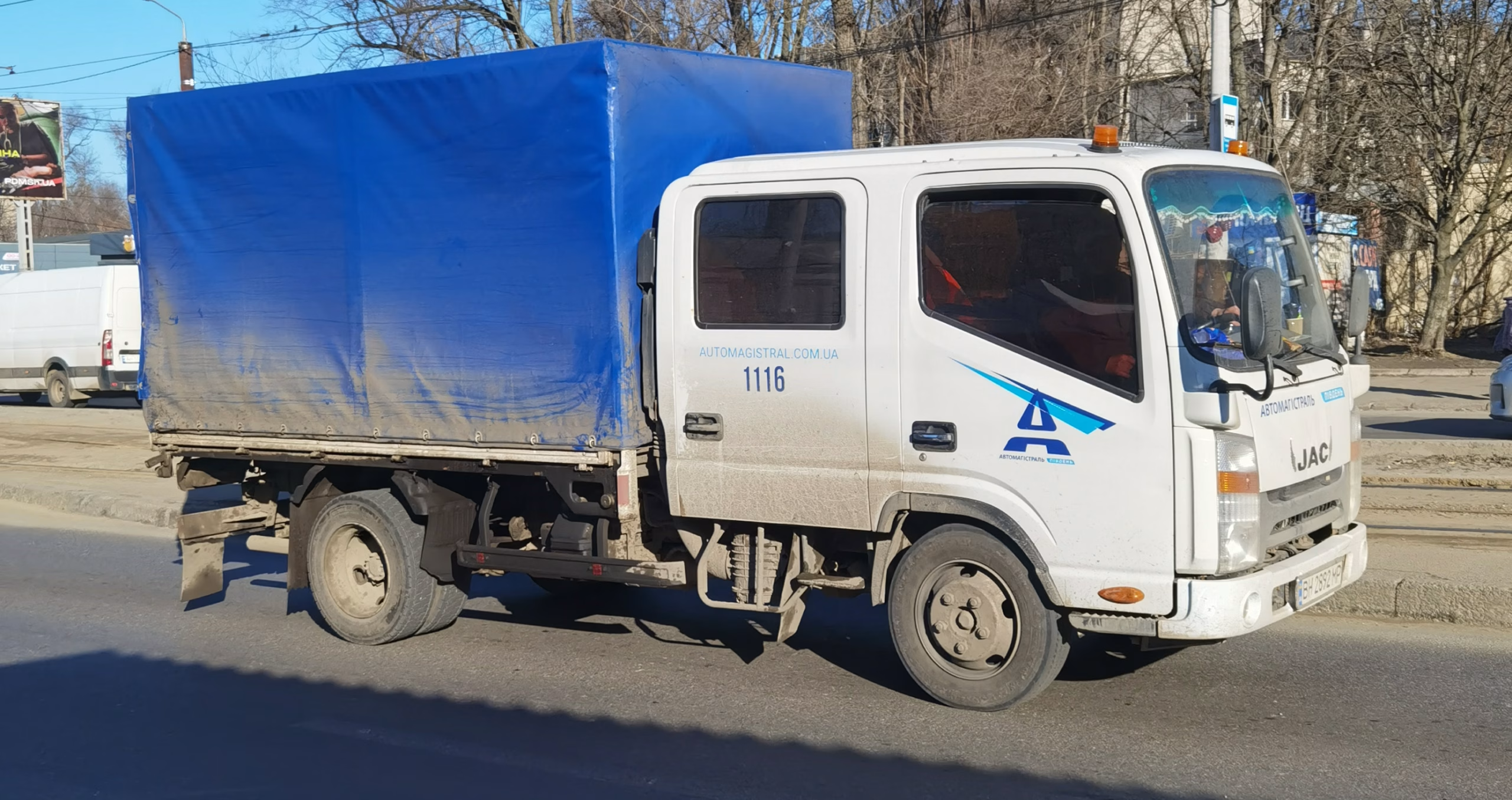
| Published distinction | Foton AUMARK S reference | JAC New N-Series reference | Purchase implication |
|---|---|---|---|
| Smaller diesel example | Cummins ISF2.8: 2.776 L, 96–110 kW, 320–360 N·m | JAC 2.7CTI: 2.746 L, 112 kW, 355 N·m | Similar engine size can lead to different parts and diagnostic files. Identify the actual engine and calibration. |
| Larger diesel examples | Cummins ISF3.8: 3.76 L, 105–125 kW, 450–600 N·m | Cummins B4.0: 3.956 L, 110–143 kW, 520–730 N·m; B4.5: 4.460 L, 118–154 kW, 540–740 N·m | Compare within the required gross-mass class and body duty. Family peak output does not establish finished payload or fuel cost. |
| Transmission provision | The cited page pairs its ISF engines with the named FOTON LIGHT transmission family. | The cited New N-Series programme lists MT and AMT choices across the family. | Identify the offered gearbox, clutch/controls, ratios and repair support. Catalogue family options are not standard on every build. |
What actually differs in the manufacturer references
The smaller diesel examples have similar displacement and overlapping torque, yet they use different engine identities: Cummins ISF2.8 in the cited Foton range and JAC 2.7CTI in the cited JAC range. That makes engine-specific parts and diagnostic support a useful purchasing distinction. These figures alone provide no measured fuel-consumption or route-cost winner.
JAC’s current New N-Series programme spans 3.5–16 tonnes GVW and includes single, double, narrow and wide cabs. Its larger B4.0/B4.5 engine examples therefore sit inside a broad vehicle programme. Match the required class first, then compare the offered body, completed mass and gearbox. For repeated-stop delivery work, an offered AMT also changes the control and service package; confirm that exact option before assigning it value.
Body mass changes the remaining load
Suppose two hypothetical trucks each have a 7,500 kg permitted gross mass. Truck A’s ready-for-duty mass is 4,000 kg; Truck B’s is 4,250 kg after its heavier body and equipment. With these assumed definitions, remaining load is 3,500 kg versus 3,250 kg. Neither number is a specification for AUMARK S or N Series. The example shows why a comparison of bare chassis prices can favour a vehicle that carries less after completion.
Have the manufacturer state exactly what the ready-for-duty mass includes: fuel, driver, spare wheel, tools, tail lift and body fittings. Check axle loading as well as the total. Goods concentrated near the rear doors can create an axle problem before the overall gross mass is reached.
Price the same delivery operation
Give both suppliers the largest package and normal pallet arrangement. Request a dimensioned body drawing and a load distribution proposal. If a tail lift is required, identify its own mass, rated duty, mounting arrangement and effect on the finished payload. Compare these details before attaching value to a larger box-volume headline.
Estimate cost per completed delivery route from your own distance, stops, fuel observations and maintenance plan. An invented USD 1,200 price difference spread across 600 productive routes is USD 2 per route before financing, resale and any operating difference. That does not prove the higher-priced truck is better; it frames the size of the benefit that must be demonstrated.
Make factory LHD/RHD a defined order item
We can coordinate new LHD and factory RHD enquiries through manufacturer relationships. Specify the steering at the start and obtain the offered export build’s documents. Cab layout, body access and service parts may differ between versions. Photos in this comparison show identified reference vehicles, and do not establish an RHD allocation or a common specification.
Request one AUMARK S and one N Series technical schedule with matching body duty, quantities and delivery endpoint. Keep an alternative engine or gross-mass class in a separate column so its costs and operating consequences remain visible.
Manufacturer and technical references
- Foton AUMARK S international manufacturer reference
- JAC New N-Series international manufacturer reference
- JAC New N-Series manufacturer specification range