
Container Car Loading: Lashing, Clearance and Photo Evidence
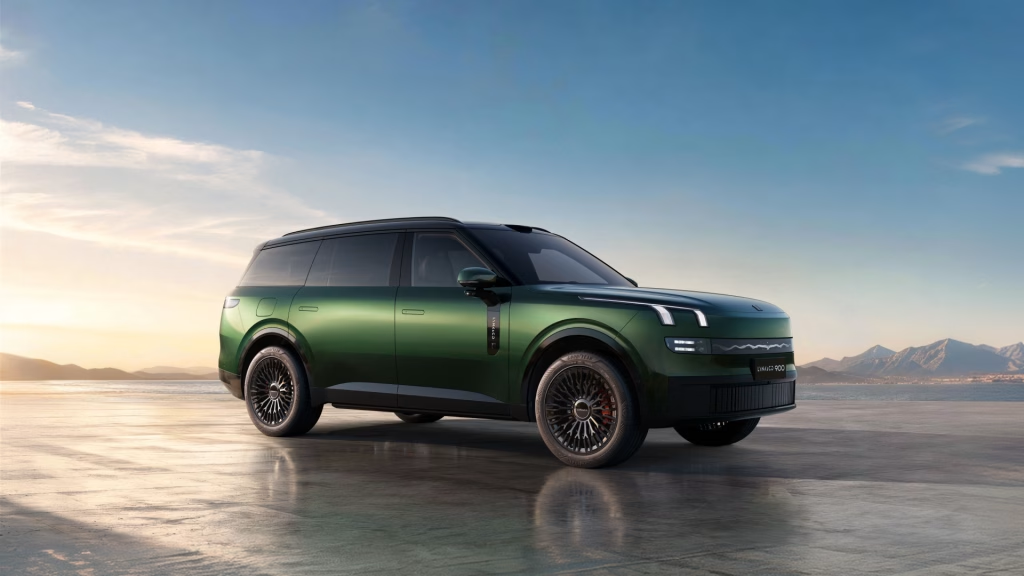
Confirm the packing plan for the exact cars
Give the forwarder the actual vehicle dimensions, mass, condition and powertrain, together with the ordered quantity. Ask the professional packing team to confirm the container arrangement, handling access, cargo acceptance and securing method. The IMO/ILO/UNECE CTU Code provides guidance on packing and securing cargo through the intermodal chain; use qualified personnel and the applicable carrier requirements for the shipment.
Review clearance and access
Ask how the team will handle vehicle entry, roof and side clearance, ground clearance and exit from the cabin. A drawing that shows only the car’s overall length does not establish a practical loading operation. Identify any packing system or rack separately and request its suitability assessment for the actual vehicle and container. Do not substitute a promotional maximum car count for a reviewed loading plan.
Related buying checks
To turn this comparison into an acceptance record, use the used-EV ocean-booking evidence pack. Agree the carrier’s acceptance evidence and the preparation records for the actual vehicle and route before reserving the shipment.
Request securing evidence
Have the packing team identify approved securing points and equipment for the vehicle and loading system. Ask for evidence that shows each car’s position and the securing arrangement clearly. A photo of the closed doors does not establish how the load was secured. The buyer’s evidence checklist helps review the work; it does not replace the professional calculation, equipment selection or packing responsibility.
Record a complete sequence
Useful evidence starts with the empty container’s visible condition and identity, then shows vehicle condition before entry, final positions, the secured load and container closure. Connect the container and seal references to the VIN schedule. Keep wide views alongside close-ups so the destination team can understand which car and which part of the packing arrangement each image shows.
Plan for receiving and unpacking
Ask the packing team to provide relevant unpacking information to the receiving personnel. Confirm who supplies suitable equipment and who supervises handling at destination. Include the agreed cargo and vehicle checks after unloading. Electric or hybrid cargo acceptance, battery state and declaration requirements must come from the actual carrier and applicable shipment rules; do not apply a universal battery percentage from a generic article.
Practical comparison
| Evidence stage | What to request |
|---|---|
| Empty container | Identity and visible interior condition |
| Before entry | VIN-linked vehicle condition |
| Final placement | Clearance and vehicle positions |
| Secured load | Professional securing arrangement |
| Closure | Container and seal references |
Buyer questions
How many cars fit in a container?
The actual dimensions, mass, loading system, access and securing plan determine the accepted arrangement.
Can I specify straps from a photo?
Use qualified packing personnel and the relevant vehicle, equipment and cargo requirements.
Is a sealed-container picture enough?
Request the preceding loading and securing sequence as well.
Prepare your enquiry
Ask the professional packing team for a vehicle-specific loading plan and an evidence sequence from entry to sealed container. Send the exact vehicle requirement, quantity and destination for an itemized quotation.
Related reading: policy and evidence review; receiving the loaded vehicles. Review the agreed inspection scope and shipping scope for the actual order.
References: IMO CTU Code overview. The checklists and comparison questions are practical buyer tools; actual documents, contracts, carrier acceptance and destination requirements must be confirmed for the order.