Plan the next buying step
Use this earlier article as background. Confirm current requirements with the destination authority or agent for the exact product, importer and route. The country EV import-guide directory is a starting point for passenger-EV enquiries; parts, machinery and other vehicle categories require their own assessment.
Keep the shipment scope explicit with the customs clearance and vehicle approval checklist. Have the destination assess the actual vehicle specification and approval route separately from customs release before scheduling road use.
Request a destination-specific sourcing and shipping quotation with the product identity, quantity and delivery scope.
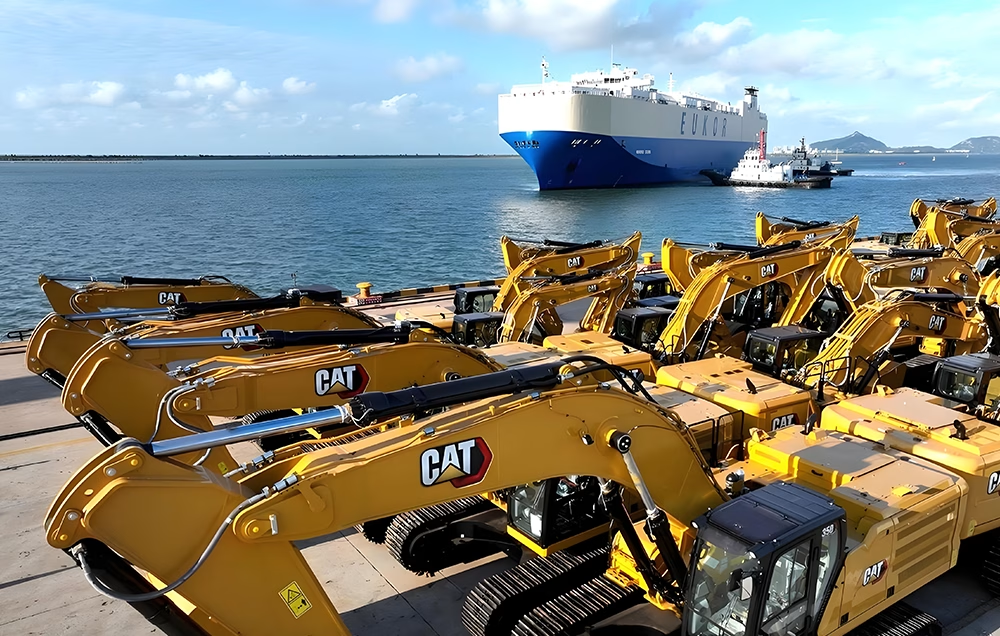
South Africa is an expanding market for the supply of heavy construction machinery, particularly excavators, which are utilised in mining, infrastructure, and agricultural development. Recently, however, Chinese-made excavators have gained significant popularity due to their competitive prices, acceptable quality, and extensive range of products.
However, importing excavators to South Africa involves its own regulatory processes, customs procedures, and documentation. This free guide covers everything from South African Bureau of Standards (SABS) certification through to SAD500 declarations – so that you can minimise delays, control costs and enjoy full compliance with South African import laws.
Step 1: Pre-Shipment Compliance and Product Verification
Before placing an order or confirming shipment, you must ensure the product is compliant with South African technical, tax, and import requirements.
Key Actions:
SABS Certification: While not all equipment requires it, some categories of construction machinery must obtain compliance approval from the South African Bureau of Standards (SABS).
ISO/CE Certifications: While not mandatory, these improve credibility and acceptance during customs inspections or third-party evaluations.
Certificate of Origin (Form E): If the excavator qualifies under trade agreements (e.g., China–SADC), you may benefit from reduced tariffs through the presentation of Form E.
Proof of Usage (for Used Units): South African customs is strict on second-hand equipment. Be prepared to present equipment usage reports, maintenance logs, or year-of-manufacture certificates.
Summary:
To avoid rejection by customs or being charged penalty fees, you’ll want to verify that your machine is technically and legally acceptable before shipping. It will also depend on whether your machine is eligible for duty concessions (which we will cover later), and duty concessions will affect your total landed cost.
Step 2: Document Preparation
To ensure a smooth customs clearance process, all key documents must be correctly prepared and verified before export.
Required Documents:
Commercial Invoice: Include HS Code (typically 8429.11.00 for crawler excavators), equipment model, brand, engine number, declared value, and sales terms.
Packing List: Detail weight, dimensions, number of packages, and container type.
Bill of Lading: Confirm whether it’s an original or telex-release. Must match container/vessel details.
Inspection Certificate: Preferably issued by a third-party authority (e.g., SGS), especially for used machines.
Quality Certification: English version of performance or testing report.
Certificate of Origin: Required for customs assessment and potential tariff reductions.
SANS 10142 Safety Inspection (for second-hand equipment): Ensure documentation of compliance to South African National Standards.
Summary:
An often incomplete or incorrect document is a significant factor in clearance delay. All documentation should be consistent, translated into English if needed and have the necessary technical and regulatory information.
Step 3: Shipping and Cargo Preparation
Given the size and weight of excavators, choosing the correct transportation method and cargo securing solution is vital.
Transport Options:
Containerized Shipping: Use 20ft/40ft containers or open-top/flat-rack containers depending on excavator size.
Breakbulk Shipping: For oversize units, special cargo arrangements may be necessary.
Key Considerations:
Ensure all machinery is securely strapped and blocked.
Take photos during stuffing and sealing for insurance and claims purposes.
Use export-grade wooden packaging (fumigated and marked) if applicable.
Summary:
Cogent container and packing choices influence freight charges and cargo security in transit. Inadequate establishment and missing load markings may result in port rejections or cargo claims.
Step 4: Export Clearance in China
China’s export process is streamlined but requires attention to detail and correct submission of documentation.
Clearance Process:
Submit export declaration with complete invoice, packing list, export license (if needed), and HS code data.
Declare whether the machine is eligible for export VAT rebates (typically 13%).
Await customs review and physical inspection if selected.
Obtain Customs Release Note (CRN) and hand over to shipping agent.
Summary:
Chinese exports typically take 1-3 business days. However, the precise HS code and value are crucial to avoid being held. When exporting large machines, ensure your broker is aware of construction equipment regulations.
Step 5: Import Clearance in South Africa
This is the most complex and regulated stage of the process and should be handled by a licensed customs clearing agent.
Steps:
Submission of SAD500: The South African Customs Declaration Form, covering all shipment details.
Tax Payments:
Import Duty: Typically 5%–15% depending on equipment classification.
VAT: Charged at 15% on CIF value (Cost + Insurance + Freight).
Customs Inspection: South African Revenue Service (SARS) may request inspection of the equipment to verify VIN numbers and specifications.
Safety Approvals: For used machinery, ensure safety compliance per SANS regulations.
Summary:
It is advisable to work with a reputable customs broker who is experienced in importing heavy machinery. Mistakes in SAD500 forms or misclassification may result in huge fines or delays.
Step 6: Inland Delivery and Post-Clearance Responsibilities
Once cleared, the excavator needs to be transported to its final destination and properly documented.
Final Steps:
Local Transport: Oversize or over-weight vehicles may require special permits for inland road movement.
Insurance: Purchase door-to-door coverage to protect against inland transit risks.
After-Sales Support: Keep all compliance documents on file in case of local inspections or asset registration.
Summary:
Last-mile delivery and documentation complete the compliance cycle. Having all the equipment delivered with verified documentation establishes trust and ease of resale, use and registration within South Africa.
Additional Tips & Risk Avoidance
Left-Hand Drive Compliance: Right-hand drive construction equipment is not permitted in South Africa.
Customs Penalties: Delays can incur charges of up to 0.1% of cargo value per day.
Port Congestion: Durban and Cape Town ports may have delays—ensure early booking and close communication with freight agents.
When it comes to shipping an excavator from China to South Africa, it can be profitable or the other way round to import the same; that is, if all documents, regulations, and logistics are in check. This manual provides step-by-step instructions for transitioning vehicles from compliance to delivery, saving importers time and preventing costly mistakes.
No matter if you are purchasing one mini excavator or needing to provide crushing and screening needs for a complete architectual project, Auto From China offers everything to take the hassle out of the procurement process for you – inspection, export compliance, dilivery, post- sales contact and interior logistics especialized for the market in South Africa. Reach out today to receive a personalised quote or logistics consultation.