Plan the next buying step
Use this earlier article as background. Confirm current requirements with the destination authority or agent for the exact product, importer and route. The country EV import-guide directory is a starting point for passenger-EV enquiries; parts, machinery and other vehicle categories require their own assessment.
Keep the shipment scope explicit with the customs clearance and vehicle approval checklist. Have the destination assess the actual vehicle specification and approval route separately from customs release before scheduling road use.
Request a destination-specific sourcing and shipping quotation with the product identity, quantity and delivery scope.
Importing tires from China to Canada provides global buyers with access to Affordable Prices and a wide variety of Goods, including regular car tires, winter tires, and heavy-duty commercial and oversized tires. On the other hand, Canada has numerous product compliance, document, and bilingual labeling regulations.
This tire import guide will help you complete the step-by-step process to import your tires into Canada, covering CSA certification, customs documentation, transportation preparations, and providing the best tips on avoiding fees and holdups. Whether it is for resale or a fleet, adhering to these steps will ensure compliance and a smooth clearance when entering Canadian ports.
Step 1: Ensure Compliance with Canadian Tire Import Standards
Before shipping, you must confirm that your tires meet Canadian regulatory standards, especially if they are winter or studded tires.
Key Compliance Requirements:
CSA Certification
The Canadian Standards Association (CSA) mandates that tires sold in Canada must be tested and marked with either a CSA or cUL symbol.
This applies especially to winter tires, which are subject to stricter performance and safety standards.
Missing CSA certification may result in immediate customs detention or rejection.
Bilingual Labeling (English & French)
All tires must be labeled with the production date (DOT code), size, load index, and type.
French translations are highly recommended, and are mandatory in provinces like Quebec.
Environmental Compliance (RoHS)
Some provinces such as British Columbia (BC) may require RoHS testing reports for rubber components, particularly in environmental audits.
Summary:
Confirm with your supplier that all tires are CSA-certified and that DOT and bilingual labeling is permanently molded onto each tire before shipment.
Step 2: Calculate Duties and Tariff Classification
Understanding import duties is essential to budgeting your shipment accurately.
Customs Tariff Details:
HS Codes for Tires
Passenger vehicle tires: HS Code 4011.10
Truck/bus tires: HS Code 4011.20
Consult the Canada Border Services Agency (CBSA) online database for updates.
Duty Rate
Most tires incur duties between 6.5% and 13%, depending on type, material, and size.
Form A (Generalized System of Preferences Certificate of Origin) can reduce duties if the tires qualify under China’s trade arrangement with Canada.
Summary:
Use CBSA’s tariff database for up-to-date HTS code verification. Incorrect HS codes can result in overpaying duties or delayed customs clearance.
Step 3: Prepare Required Documentation
Proper documentation is essential for Canadian customs clearance and ensures timely processing at the port of arrival.
Required Import Documents:
Commercial Invoice
Must list the CIF or FOB value, tire types, sizes, and total unit counts.
Packing List
Include gross weight, net weight, quantity per SKU, and packaging style.
Bill of Lading (B/L)
Ensure that the consignee matches the name of the Canadian importer.
CSA Certification
Submit a scanned version electronically; carry the original for port checks.
Certificate of Origin (Form A)
Useful for tariff preference claims under Canada’s GSP.
Shipping Notification Documents (if applicable)
Although ISF 10+2 is a U.S. requirement, some logistics firms mistakenly skip proper documentation that may be requested by carriers. Ensure full coordination.
Summary:
Inaccurate or incomplete paperwork is one of the top causes of port delays. Double-check all information, especially consignee names and invoice values.
Step 4: Customs Clearance and Port Procedures in Canada
Once the shipment arrives at a Canadian port, the customs clearance process begins. Here’s what to expect:
Key Clearance Steps:
Arrival Notice
Your freight forwarder or shipping agent will notify you once the vessel arrives.
Customs Declaration via CBSA
A licensed customs broker submits the declaration including HS code, declared value, and applicable certificates.
Duties and VAT are assessed on the CIF value of the tires.
Document Matching
All documents must match in terms of quantity, description, and weight. Even small discrepancies can trigger inspection.
Inland Delivery or Warehouse Storage
Once cleared, tires can be transported directly to your facility or temporarily stored at the bonded warehouse.
Summary:
Customs processing in Canada typically takes 3–5 working days. Work with an experienced broker to ensure document accuracy and accelerate processing.
Step 5: Logistics, Shipping & Packaging Notes
Managing the logistics of a tire shipment to Canada involves understanding packaging, routing, and cost-efficiency options.
Logistics Tips:
Recommended Ports
Port of Vancouver: Ideal for shipments to western Canada.
Port of Montreal: Serves the eastern market efficiently.
Shipping Method
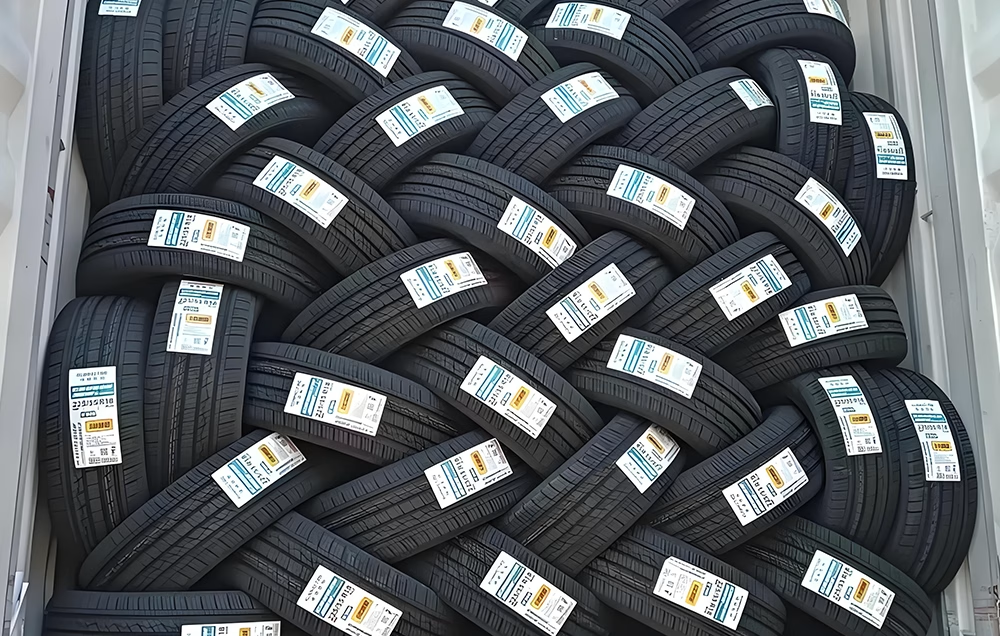
For full-container loads (FCL), ensure even tire stacking and weight balance.
For smaller shipments, use LCL (Less-than-Container Load) to minimize cost—since tires are volume-based (low weight but large volume).
Packaging
Use fumigated wooden pallets stamped with IPPC markings to comply with Canada’s strict phytosanitary regulations.
Pallets without proper markings may be rejected or destroyed at port.
Summary:
Tires are considered high-volume cargo. Optimize your shipment by balancing full loads with cost-effective palletization and compliant packaging materials.
Common Pitfalls to Avoid
| Risk | Consequence | Solution |
| Missing CSA Certification | Customs seizure or shipment rejection | Confirm certification before shipping |
| No French labeling in Quebec | Legal penalties and resale bans | Use bilingual labels on all tires |
| Winter shipping delays | Extended port hold during peak season | Ship at least 2 months ahead of winter demand |
| Incomplete consignee information | Delayed clearance | Ensure invoice and B/L match importer identity |
| Using untreated wood pallets | Port fines or destruction | Use IPPC-stamped fumigated pallets only |
Conclusion
Shipping tires from China to Canada is not just about finding a competitive supplier; it’s also about ensuring a seamless process. From CSA-approved and bilingual labelling, proper documentation, to customs duties, attention to detail and knowledge are required at each step of the way.
Auto From China partners with licensed tire producers and veteran logistics specialists to ensure that your order is Canadian compliant, all without worrying about customs delays or additional fees. Contact us today to have your current tires sourced with complete compliance and cost transparency.