
Shangjie H5 BEV vs EREV: Pro, Max+ and Long Range Explained
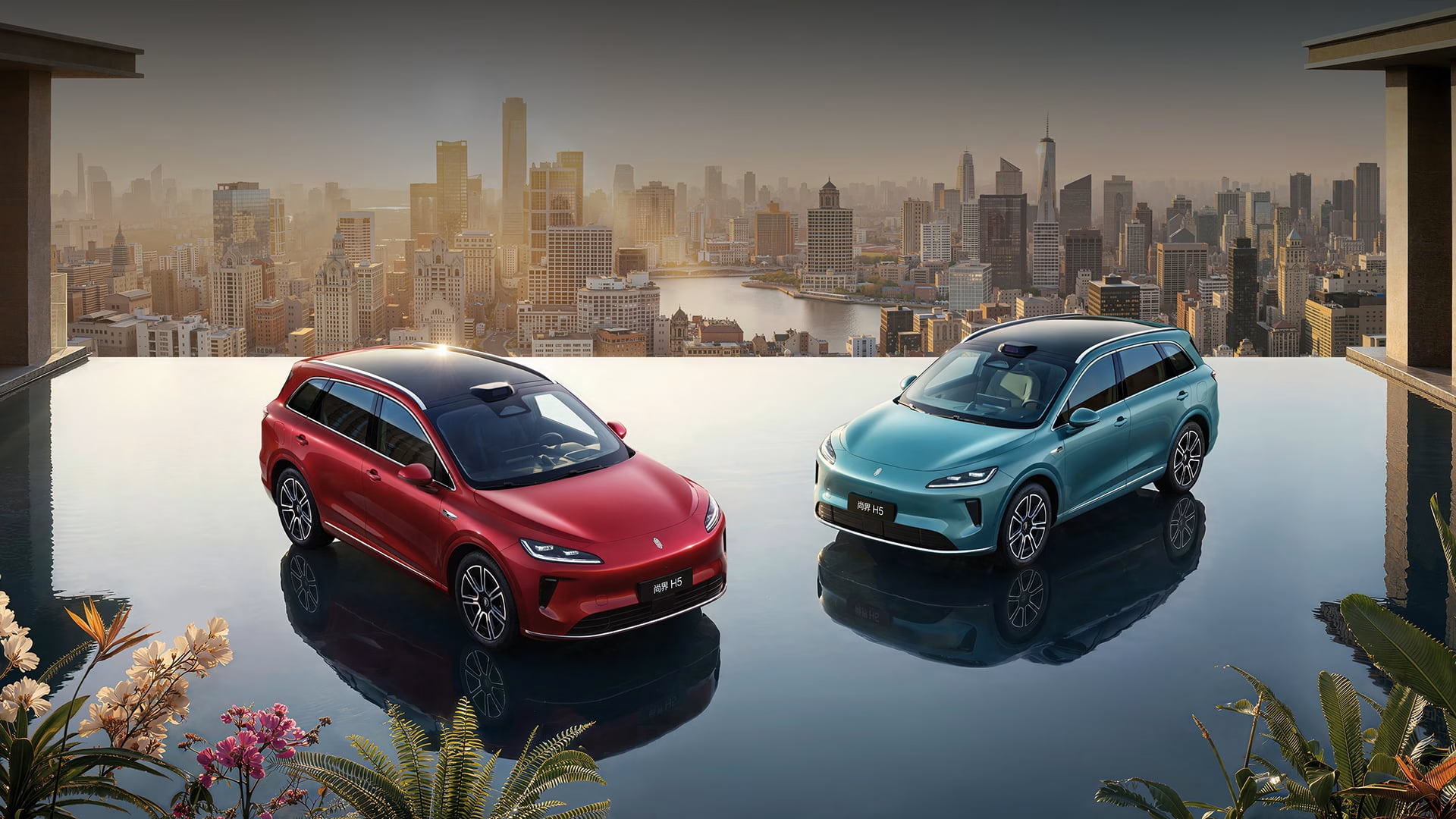
Read Shangjie H5’s six configuration columns without mixing Pro equipment, Max+ assistance hardware and long-range battery references.
Read the name in three parts
H5’s referenced matrix separates powertrain, equipment grade and, for some BEV versions, Long Range. A request for “H5 Max” is incomplete when the source names Max+ and distinguishes BEV from EREV. Keep the full factory wording on the comparison. Ask for the production record and installed battery after allocation, especially where a translated trim name appears differently in the supplier’s offer.
The BEV battery choice changes chemistry as well as capacity
Pro and Max+ standard-range BEV columns use a 64.6 kWh LFP reference. Their Long Range counterparts use an 80 kWh NMC reference. The CLTC distances are 535 and 655 km for Pro, and 525 and 640 km for Max+ respectively. Use the matching column rather than advertising the largest family distance for every H5. Actual route planning still needs charging and operating conditions.
Pro and Max+ are equipment choices, not just distance choices
The source distinguishes the basic assistance package on Pro from the higher package on Max+, including the referenced 192-line LiDAR. A Long Range Pro is not automatically a Max+ merely because the battery is larger. Make a list of the cabin, parking and assistance functions that matter, and ask the supplier to mark standard, optional and unavailable items on the actual grade.
The EREV comparison starts with a different battery
Both Pro EREV and Max+ EREV use a 32.6 kWh LFP reference, a 1.5 L range extender and RWD. Their 235 km CLTC electric-only reference is separate from the 1,360 km combined fuel-plus-battery reference. Compare regular charging and engine servicing together. Do not use the BEV Long Range battery or distance to describe an EREV offer.
Inspect the configuration rather than the promotional image
Request current exterior and cabin pictures, the installed battery record and selected options. Verify charging inlets and destination compatibility. Assistance requires driver supervision, and the source’s China functions do not establish operation abroad. Keep current stock evidence separate from a manufacturer photograph. If the supplier changes powertrain, grade or battery after quoting, revisit the comparison and update the written order.
Comparison at a glance
| Decision | What to compare |
|---|---|
| Standard BEV | 64.6 kWh LFP; Pro and Max+ equipment differ |
| Long Range BEV | 80 kWh NMC; retain Pro or Max+ grade |
| EREV | 32.6 kWh LFP plus range extender |
| Assistance | Hardware and enabled destination functions are separate |
Buyer questions
Is Long Range the highest equipment grade?
No. It describes a BEV battery/range choice; Pro and Max+ remain separate equipment grades.
Are all H5 versions AWD?
The referenced six columns list single-motor RWD. Confirm the exact offered production record.
Build an enquiry that can be quoted
Send the complete model and trim, quantity, preferred colours, destination country and port, and the equipment you cannot compromise on. Request an itemized sourcing quotation. Availability, price, warranty and delivered software must be established for the actual order, not inferred from a manufacturer image.
Browse H5 Pro Long Range BEV; H5 Max+ Long Range BEV; H5 Pro EREV; H5 Max+ EREV. Review the agreed inspection scope and shipping scope before shipment.
Official references: Shangjie H5 matrix. Laboratory range and manufacturer equipment references do not guarantee destination operation. Optional and promotional equipment must be identified separately.
Related buying checks
To turn this comparison into an acceptance record, use the charging acceptance checklist for a China-market EV. Use the installed ports, electrical limits and a demonstration with the intended equipment to turn a charging assumption into an acceptance record.