
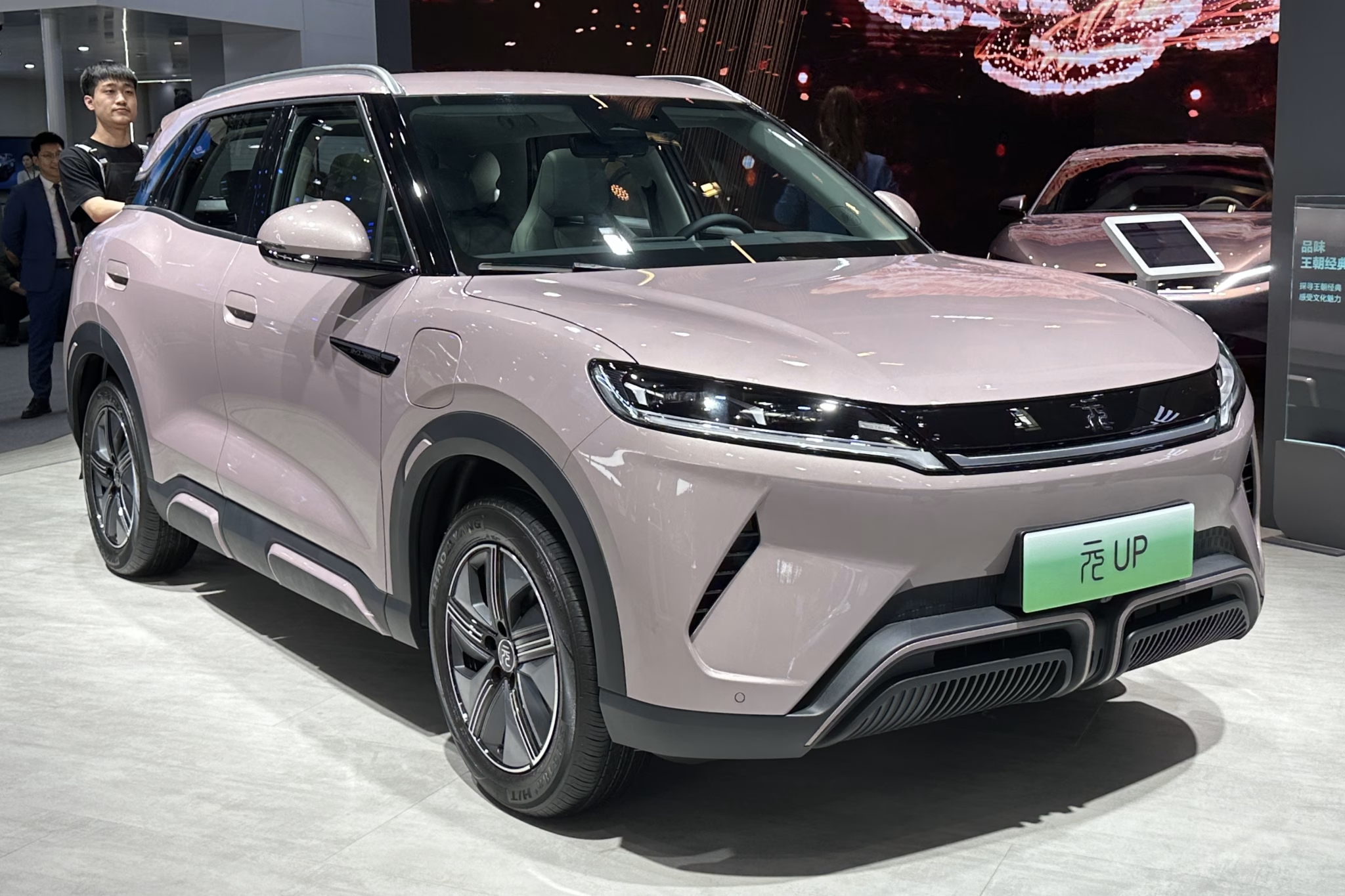
An electric car needs a booking that describes the actual vehicle and battery condition. A quotation for “one car in a container” is not sufficient evidence that a shipping line has accepted a lithium-ion-powered vehicle on the intended service.
The IMO confirms that the IMDG Code 2024 Edition, incorporating Amendment 42-24, became mandatory on 1 January 2026. The revised entries include UN 3556 for lithium-ion-battery-powered vehicles. The relevant classification must be established for the actual cargo and transport arrangement; copying an old vehicle declaration can cause a mismatch. IMO’s current code information and the UK maritime authority’s amendment explanation describe the change.
Classification and acceptance answer different questions
A dangerous-goods classification identifies how the cargo is described under the applicable rules. Carrier acceptance establishes whether a particular line, vessel and route will carry it under their conditions. A valid classification does not compel a carrier to accept the shipment.
Ask the forwarder to identify the classification, applicable provisions, declaration requirements and written acceptance for the chosen movement. Container transport and approved vehicle spaces on a car carrier should not be assumed to have identical treatment. Any exemption must be checked against its conditions by the responsible shipper and carrier.
| Shipment detail | Procurement evidence | Booking question |
|---|---|---|
| New or used complete EV | VIN, battery type and condition record | Is this exact cargo category accepted? |
| Non-running or damaged vehicle | Honest condition report and battery assessment | Are additional restrictions or refusal criteria triggered? |
| Spare traction battery | Separate battery identity, condition and packing information | Is it a different cargo classification and booking? |
| Mixed vehicle batch | Unit-by-unit identity and powertrain list | Are all units covered by the booking description? |
Obtain battery-condition evidence before the booking cut-off
Record whether the vehicle has collision, flood, overheating or battery-fault history. A clean exterior does not resolve a known high-voltage fault. Disclose material condition information to the carrier through the booking process rather than waiting until the car reaches the terminal.
A damaged or defective battery needs specialised assessment and may make the proposed movement unacceptable. This article does not supply instructions for packing or shipping such a battery. The decision belongs with the appropriate qualified parties and carrier acceptance process.
Maersk’s March 2026 used-lithium-battery advisory asks for information including intended use, packaging, condition, SOC and photographs for that cargo category. It is an example of a specific carrier’s battery policy, not a universal rule for all complete cars. Read the advisory.
Do not apply a universal SOC percentage
The permitted shipping SOC should come from the accepted booking and applicable requirements for the exact cargo. A number used for a road transport service, an air shipment or a standalone battery should not automatically be applied to a complete EV at sea.
Before terminal delivery, document the agreed SOC condition, who measures it, when the measurement is taken and how vehicle operation before loading may change it. Also confirm handling instructions, key access and any required low-voltage or alarm arrangements through the manufacturer and carrier. Do not make unauthorised changes to the vehicle to satisfy an assumed rule.
Build the booking file around one consistent vehicle list
Use a VIN list linked to the commercial invoice, packing or unit list, dimensions, weight, condition evidence and agreed battery information. Have the responsible forwarder or shipper specify the additional declarations and supporting documents. A UN 38.3 test summary, where requested, answers a battery-testing question; it does not by itself establish booking acceptance.
For several cars, control additions and substitutions. A replacement vehicle can change dimensions, weight, battery chemistry or condition. Obtain acceptance of the revised list before dispatching substituted units to the terminal.
Review the full movement, including destination handling
Confirm who provides terminal access, collects the cars, manages discharge inspections and arranges compliant inland transport. Coordinate document release with the receiving agent so an accepted sea shipment does not become an avoidable storage problem at arrival.
Keep transit insurance scope separate from carrier acceptance. Acceptance to carry an EV does not establish coverage for every form of damage or every handling stage.
Request a shipment-specific logistics scope
Send the destination port, vehicle list, registration status and known condition through our vehicle logistics service. Ask for an itemised quotation identifying the proposed movement, acceptance evidence and preparation responsibilities, alongside a pre-shipment condition inspection.
Sources reviewed on 9 October 2026. Applicable classifications, exemptions and carrier conditions must be confirmed for the eventual booking; a future publication of the code is not the same as its mandatory application date.